
How Long Does Bathtub Refinishing Last?

In short: A professionally refinished bathtub typically lasts 10 to 15 years, and often longer with attentive care. How long bathtub refinishing lasts depends on the quality of the surface prep, the coating used, and how gently you clean and use the tub. At GlossyTub in Bound Brook, NJ, we've seen properly prepped tubs stay glossy well past a decade.
The Short Answer: 10 to 15 Years
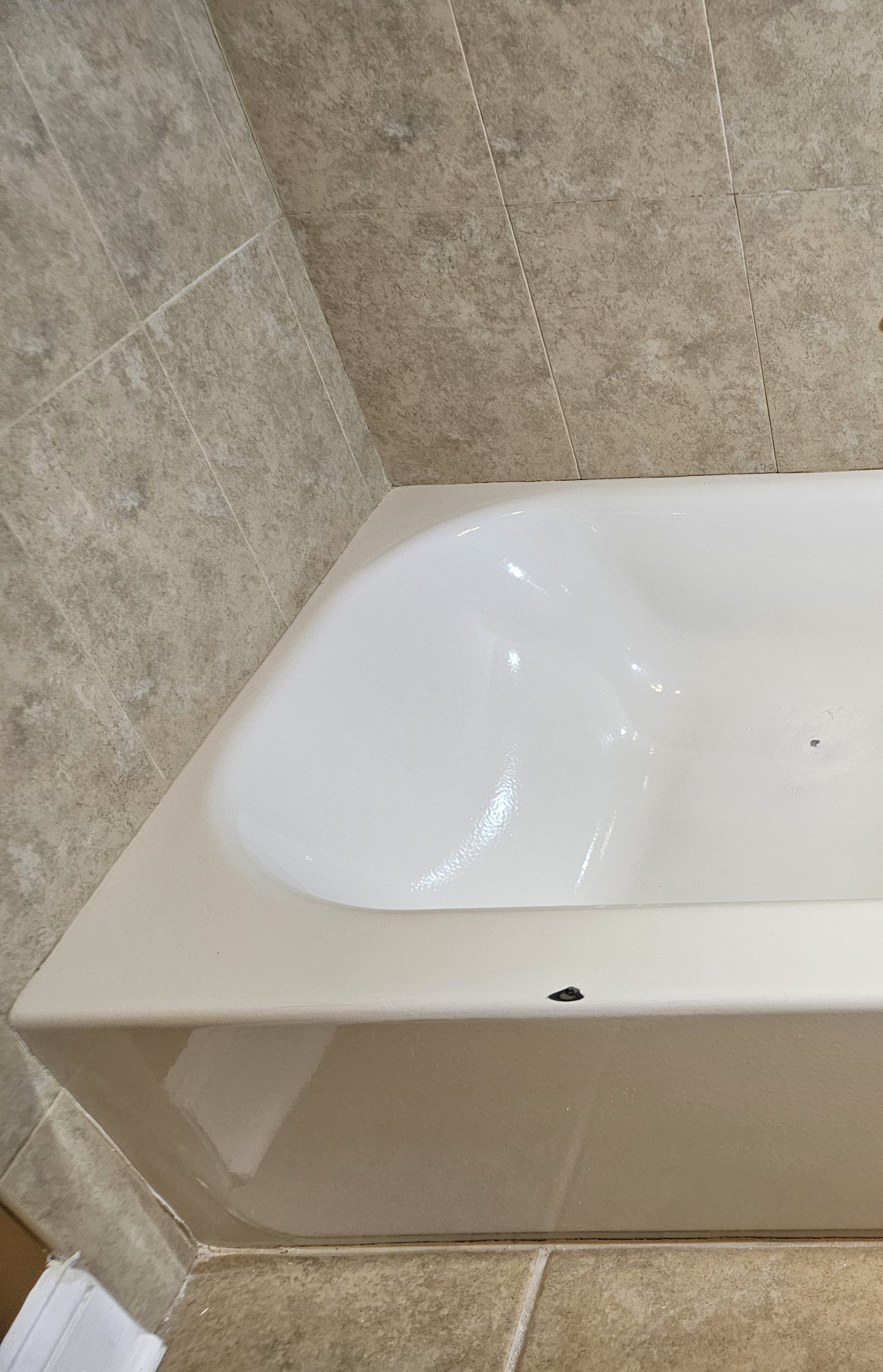
How long does bathtub refinishing last? For a job done by an experienced crew, expect roughly 10 to 15 years of smooth, glossy service, and plenty of tubs go longer. Refinishing (also called reglazing or resurfacing) bonds a fresh coating onto your existing tub, so the real lifespan comes down to two things: how carefully the surface was prepped and how the tub is treated afterward.
That 10-to-15-year range assumes a genuine professional process: acid etching or sanding, a proper bonding primer, and several thin, evenly sprayed topcoats that are allowed to cure fully. A rushed job or a hardware-store kit is a completely different story, which we break down further down the page.
What "Lasting" Really Means for a Refinished Tub
A refinished surface doesn't fail all at once. In the early years it stays smooth, sealed, and easy to wipe clean. As it ages, you may notice the gloss softening, and in a neglected tub, small chips or peeling can start near the drain or overflow. A well-bonded finish simply holds off those signs far longer.
The real enemy of any coating is adhesion failure, when the topcoat loses its grip on the tub beneath it. Thorough prep is what prevents that, which is exactly why we never cut corners on etching and cleaning at GlossyTub. Get the bond right and the finish stays put for a decade or more.
Does Your Tub's Material Change the Lifespan?
Refinishing bonds to almost any tub: cast iron, pressed steel, acrylic, fiberglass, cultured marble, and even ceramic tile. On rigid tubs like cast iron and steel, a properly prepped finish is extremely stable and tends to sit at the top of that lifespan range.
Flexible acrylic and fiberglass tubs can be a little more sensitive to hard impacts and flexing, but with correct prep and a quality coating they still reach a similar 10-to-15-year life. The lesson: your tub's material matters less than the prep and the care it gets afterward.
What Shortens the Life of a Refinished Bathtub
A handful of habits and conditions quietly shorten a refinishing job's life. The number one culprit is harsh, abrasive cleaners: scouring powders like Comet, along with bleach and ammonia-based sprays, slowly eat away at the topcoat and dull the gloss. Standing water is a close second, since a dripping faucet or a slow-draining tub that leaves water pooling will eventually work its way under the coating and cause it to lift.
Suction-cup bath mats trap moisture and tug at the finish every time they're pulled up, so a mat left in place can create a peeled patch over time. Poor original prep, like coating over soap scum or skipping the etch, dooms a finish from day one. And DIY kits, with their thin coatings and minimal prep, often start failing within just 1 to 3 years.
How to Make Reglazing Last Longer
Stretching a refinished tub toward and past 15 years is mostly about easy, everyday care. Clean only with non-abrasive, liquid products and a soft cloth or sponge; a squirt of dish soap or a gentle bathroom spray is all a refinished tub needs. Fix drips and slow drains quickly so water never sits on the surface, and wipe the tub dry now and then to keep minerals and standing water from doing slow damage.
Let the coating cure fully before the first use, usually 24 to 48 hours, and we'll give you the exact window when we finish your tub. Finally, skip the suction-cup mat or at least hang it up to dry after every bath. These small habits are what separate a finish that fades in five years from one that still shines at fifteen, and they're the simplest way to make reglazing last longer.
What Professional Refinishing Involves
It helps to see what a proper refinishing actually involves, because every step feeds directly into how long the result lasts. First we clean and de-gloss the tub, remove old caulk, and repair chips or cracks. Then the surface is etched so the coating has something to grab onto, and a bonding primer is applied.
From there we spray on several thin, even coats of professional topcoat and let everything cure. The whole job usually takes just a few hours, and the tub is ready for normal use in a day or two. Skipping or rushing any of these steps is exactly what causes a finish to fail early, so the process itself is your best predictor of durability.
Why Prep and Product Quality Drive Durability
Refinished bathtub durability is really decided before the first coat is ever sprayed. The surface has to be stripped of old caulk and grime, any chips and cracks filled, and the existing glaze etched so the new coating can physically grip it. Spraying over a dirty or glass-smooth surface is like painting over dust; it looks fine for a while, then peels.
The topcoat itself matters just as much. Professional-grade acrylic and urethane coatings are engineered to shrug off daily water, heat, and cleaning. That's the core reason a pro job outlasts a kit, and why how long reglazing lasts swings so widely between a cheap box from the hardware store and a proper, sprayed refinishing service.
DIY Kit vs. Professional Refinishing
A store-bought refinishing kit can freshen a tired tub for a season, but most only hold up 1 to 3 years before they yellow, peel, or go dull. The prep is minimal, the roll- or brush-on coating is thin and uneven, and there's no spray equipment to lay down a smooth, factory-style finish.
A professional refinishing job, with multiple sprayed coats over a properly etched and repaired surface, is what earns that 10-to-15-year lifespan. If you've already tried a kit and it's peeling, don't worry: we can strip the old coating off and start fresh, with no tub removal required.
Signs It's Time to Refinish Again
A few clear signals tell you the finish has reached the end of its road: peeling or flaking (often beginning near the drain or faucet), a chalky surface that won't come clean, rough patches you can feel with your hand, or staining that no longer scrubs away. Any one of these means it's time to refresh the coating.
Here's the reassuring part: a tub that's been refinished once can almost always be refinished again. We remove the worn coating, re-prep the surface, and apply a brand-new finish. There's no need to rip out the tub, tear up tile, or take on a full remodel.
Refinishing vs. Replacing in New Jersey
In our Central NJ service area, professional bathtub refinishing typically falls somewhere in the range of about $350 to $650 for a standard tub. That's a rough estimate, not a fixed quote; the real price depends on your tub's size, material, and condition. Full tub replacement, by comparison, usually climbs into the thousands once you factor in demolition, plumbing, new tile, and labor.
Spread across a 10-to-15-year lifespan, refinishing is one of the most cost-effective upgrades a homeowner, or a hotel refreshing many rooms at once, can make. We refinish tubs, tile, and sinks, and we work with both homeowners and hospitality clients across Somerset, Middlesex, Union, and Monmouth counties.
GlossyTub is a family-owned refinishing company based in Bound Brook, NJ, with more than 20 years of experience making old tubs look new again. Estimates are always free; just call or text a photo of your tub to (732) 595-2608, and we'll tell you honestly what to expect.
Frequently Asked Questions
How long does bathtub refinishing last?
A professional bathtub refinishing job typically lasts 10 to 15 years, and often longer with gentle care. Store-bought DIY kits usually last only 1 to 3 years. The two biggest factors are the quality of the surface prep and how you clean and use the tub afterward.
How long does reglazing last compared to replacing the tub?
Reglazing lasts about 10 to 15 years and can be redone when it eventually wears out. A brand-new acrylic or porcelain tub can last for decades, but it costs several times more once demolition, plumbing, and tile work are added. For most homeowners, refinishing every decade-plus is the more economical route.
Can a refinished bathtub be refinished again?
Yes. When the coating wears out, we strip it off, re-prep the surface, and apply a fresh finish, with no need to remove the tub. Many tubs are successfully refinished more than once over their lifetime.
What cleaners are safe for a refinished bathtub?
Use only non-abrasive, liquid cleaners with a soft cloth or sponge; a little dish soap or a gentle bathroom spray works perfectly. Avoid scouring powders, bleach, and ammonia-based products, which gradually break down the coating and shorten its life.
How soon can I use my tub after refinishing?
Most coatings need roughly 24 to 48 hours to cure before you run water or step in, and we'll give you the exact wait time for your specific job. Using the tub too soon is one of the most common reasons a fresh finish fails early.
Comments